Категории
Новый Блог
Producing mushroom-shaped caramel popcorn on a commercial scale requires more than a high-capacity popcorn machine. Manufacturers need to consider kernel selection, popping performance, caramel preparation, coating consistency, cooling, and final packaging as parts of one connected production process.
Mushroom popcorn is particularly popular for caramel-coated products because its rounded shape provides a relatively broad surface for coating and can help the finished pieces maintain a more uniform appearance. However, the final product depends on the combination of raw material quality, popping conditions, and downstream processing.
For factories planning to manufacture mushroom-shaped caramel popcorn, choosing the right equipment means finding a production configuration that can handle the entire process reliably. XFD provides industrial popcorn machines, caramelizers, cooling and filtering equipment, and integrated production lines for different factory requirements.
Mushroom popcorn differs from conventional butterfly popcorn in its expansion shape. Butterfly popcorn has irregular wings, while mushroom popcorn develops a more rounded structure. This difference matters when producing caramel popcorn because the shape influences coating coverage, product appearance, and how pieces behave during mixing and transportation.
For example, caramel coating is usually distributed through a combination of heated syrup preparation and mechanical mixing. A rounded popcorn structure may be better suited to products that require a relatively consistent outer coating and a more uniform finished appearance.
However, equipment alone cannot determine the final popcorn shape. Manufacturers should first select suitable mushroom-type kernels and evaluate their moisture, size, expansion characteristics, and popping performance.
Before investing in a complete industrial popcorn machine, it is worth conducting sample popping tests with the actual kernels intended for production. This helps confirm whether the equipment can achieve the desired expansion and provide a suitable product for caramel coating.
The popping stage establishes the basic structure of the finished product. If kernels expand unevenly, contain too many unpopped pieces, or produce fragile popcorn, the coating and packaging stages may become more difficult to control.
For industrial mushroom popcorn production, manufacturers can evaluate hot-air popping and electromagnetic popping according to their output requirements and processing preferences.
Hot-air popping equipment uses heated airflow to expand the kernels. It can be considered for continuous or integrated production arrangements where factories want to connect popping, feeding, coating, and subsequent handling operations.
Electromagnetic popcorn equipment heats a suitable metal kettle through electromagnetic technology. Industrial configurations can use multiple popping machines to increase total output while maintaining a batch-based production arrangement.
Neither method automatically guarantees better mushroom-shaped popcorn. Kernel variety, moisture conditions, heating settings, and machine configuration all need to be evaluated together.
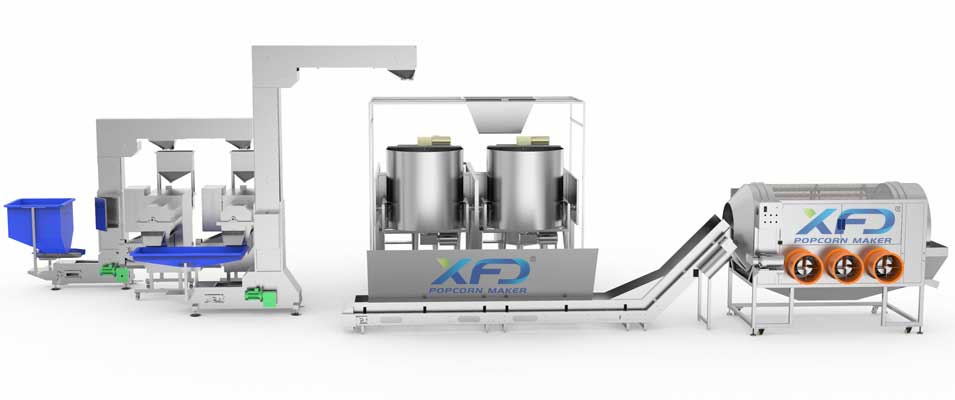
For factories looking for a hot-air solution, XFD's factory hot-air popcorn machine and caramelizer production line combines popping, feeding, caramelizing, conveying, and cooling-related processing equipment in an integrated arrangement.
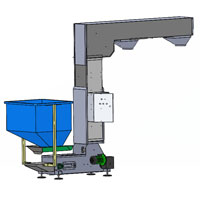
After popping, the next major consideration is caramel preparation and application. Caramel popcorn requires a suitable cooking and mixing system to distribute the coating across the expanded kernels without creating excessive clumping or uneven coverage.
A professional caramelizer generally needs to handle several important operations:
When selecting a caramelizer, manufacturers should pay attention to batch size, heating control, mixing action, ingredient viscosity, and the amount of popcorn entering the machine per hour.
A caramelizer that is too small may become a bottleneck even when the popping equipment has sufficient capacity. On the other hand, an oversized machine may increase investment costs without improving actual production efficiency.
XFD's industrial solutions include large-size caramelizers designed for professional popcorn factories. The industrial hot-air popcorn and caramelizer production line is one option for manufacturers producing caramel or chocolate popcorn at larger volumes.
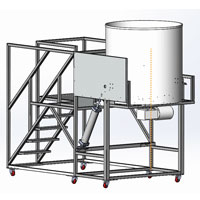
Cooling is an important part of caramel popcorn manufacturing, not simply an additional operation after coating. Freshly processed popcorn may still contain considerable heat, and the caramel coating needs suitable conditions to set before the product can be handled and packaged.
If the cooling stage cannot keep up with the caramelizer, coated popcorn may accumulate between processing operations. This can lead to inconsistent handling conditions, increased product contact, and difficulties maintaining a stable production flow.
Factories should evaluate cooling equipment according to:
XFD offers a rotating vibrating drum sieve cooling and filtering machine designed to cool popcorn and separate undersized materials. Its configuration uses multiple high-speed cooling fans and a rotating drum structure to support product cooling and screening.
For caramel popcorn factories, the exact position of this equipment should be determined by the recipe and production arrangement. Some systems require cooling immediately after popping, while others need a dedicated cooling stage after caramel coating. These are different process requirements and should not be treated as interchangeable.
One common mistake when purchasing popcorn machinery is focusing only on the rated output of the popping machine. In actual factory operations, the production capacity of the complete line is influenced by the slowest processing stage.
For example, a popping machine may produce enough popcorn for a high-volume operation, but if the caramelizer, cooling system, or packaging equipment cannot process the same amount, the line may experience repeated interruptions.
The following table provides a practical framework for equipment planning:
| Production Stage | Main Equipment | Key Consideration |
|---|---|---|
| Kernel preparation | Feeding system | Stable ingredient supply |
| Popping | Hot-air or electromagnetic popper | Kernel expansion and output |
| Caramel preparation | Pre-melting tank and caramelizer | Temperature and mixing control |
| Coating | Cooker and coater | Uniform coating distribution |
| Cooling and separation | Cooling and filtering machine | Cooling capacity and product flow |
| Final packing | Suitable packaging system | Pack size and sealing requirements |
Manufacturers should compare the actual usable capacity of each machine rather than relying only on the maximum output stated in a product specification. Different recipes, coating weights, product sizes, and operating conditions can affect real production performance.
Equipment selection should also account for the physical arrangement of the factory. A well-planned production line reduces unnecessary product transfers and helps operators access machines for cleaning, inspection, and maintenance.
Before purchasing machinery, manufacturers should confirm:
For example, XFD's ICX-GT-2 hot-air production line is listed for approximately 180–250 kg/h of caramel or chocolate popcorn, depending on the selected configuration and actual production conditions. The line is also designed to support additional popping machines and caramelizers when production capacity needs to increase.
This type of configuration can be useful for manufacturers planning to expand their product range or increase output over time. Actual capacity should always be confirmed with the supplier using the intended kernel, recipe, and production requirements.
Before placing an equipment order, it is helpful to prepare a clear production specification. This allows the manufacturer and equipment supplier to discuss the same requirements instead of comparing machines based on general descriptions.
A practical evaluation should cover:
It is also worth asking the supplier to evaluate representative raw kernels and the intended caramel recipe. A production trial can help identify whether the proposed equipment arrangement is suitable before the factory commits to a complete line.
XFD focuses on popcorn production machinery and integrated processing solutions, covering industrial popping, caramelizing, cooling, and related equipment. For manufacturers planning a new mushroom-shaped caramel popcorn factory or upgrading existing production facilities, selecting equipment around the finished product is a more reliable approach than purchasing individual machines without considering the complete workflow.
What equipment is needed to produce mushroom-shaped caramel popcorn?
A typical industrial setup includes a suitable mushroom-kernel popping system, a caramel preparation and coating machine, conveying equipment, cooling and filtering equipment, and packaging machinery. The exact configuration depends on the production target and coating recipe.
Is hot-air popping suitable for mushroom popcorn production?
Yes. Suitable industrial hot-air popcorn equipment can process mushroom-type kernels. The final expansion shape depends on kernel variety, moisture, heating conditions, and operating parameters, so sample testing is recommended.
Why is mushroom popcorn often used for caramel coating?
Its rounded structure can provide a relatively consistent surface for coating and help create a uniform finished appearance. The actual coating result still depends on the recipe, coating equipment, and mixing conditions.
How do I choose a caramelizer for industrial popcorn production?
Compare the caramelizer's processing capacity, heating control, mixing performance, ingredient compatibility, cleaning requirements, and discharge method. Its usable output should match the popping and cooling stages.
Does caramel popcorn need cooling equipment before packaging?
Yes. The cooling stage helps the caramel coating set and prepares the product for subsequent handling. The required cooling conditions depend on the coating recipe, product temperature, airflow, and factory environment.
How much production capacity should a caramel popcorn line have?
There is no universal capacity requirement. Manufacturers should calculate expected sales demand, operating hours, product mix, and the output of every processing stage before selecting a production line.
Can a popcorn production line be expanded later?
Some industrial configurations allow additional popping machines, caramelizers, or downstream equipment to be incorporated. Expansion possibilities should be confirmed during the initial equipment and factory layout planning.
Choosing equipment for mushroom-shaped caramel popcorn production is ultimately about balancing product quality, processing capacity, and operational efficiency. With suitable popping, caramelizing, cooling, and conveying equipment, manufacturers can build a more consistent production process and prepare their factories for future growth.
Explore XFD's industrial popcorn machinery and production solutions to find an equipment configuration that matches your product specifications and factory requirements.
 No.58 TongMing Road,TongAn District,XiaMen City,FuJian Province
 +86-592-5701935
Если вы заинтересованы в любом xfd по продукту, пожалуйста, оставьте нам сообщение, мы ответим вам в ближайшее время.
Авторское право © 2012-2026 XFD XIAMEN MACHINERY TECHNOLOGY LTD..Все права защищены.
 русский
 English
 Deutsch
 español
 português
 Nederlands
 العربية
 हिंदी


